This blog is written by Brad Curabba, Senior Instructor in the College of Arts and Sciences, Department of English at American University of Sharjah, where he teaches academic writing to a diverse undergraduate population.
I am a senior instructor at the American University of Sharjah in the United Arab Emirates, where I teach academic writing courses to a diverse group of undergraduate students. These courses are designed to improve students critical reading, writing and thinking skills, as well as develop information literacy and academic research skills. The assessments for these courses typically range from academic summaries, small essays based on close reading of texts to large,
research-driven essays.
AUS is in a unique position in the UAE and in the region to deliver a high-quality liberal arts education. Graduates of AUS are known to employers for their exceptional communication skills, as well as their ability to adapt to change and learn independently, a product of their time spent in the classroom and among a campus environment which is one of the most diverse on the planet….90 nationalities are represented in the student body at AUS!
Artificial intelligence and more specifically LLM’s have transformed the endeavor of teaching academic writing and research skills at universities around the world. Some will embrace the technology while others will try and either ignore its existence or spend most of their time trying to limit or restrict the use of AI. Either way, one thing is for sure, assessments are changing, the traditional essay is, arguably, no longer relevant. This is the main reason why I chose to use the
bulb platform in my classrooms. I needed a way for the students to engage with multimodal artifacts and to summarize and present on complex topics in a more visual and engaging way.
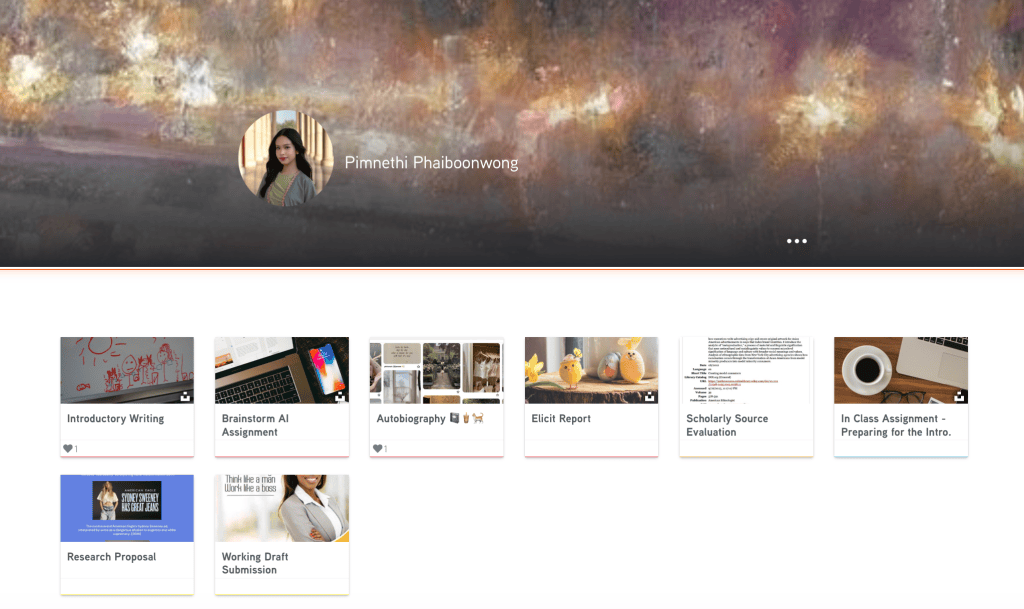
bulb offered both a user-friendly and powerful platform for my students to explore various multimodal assignments. Additionally, I wanted a place, other than the online learning management system, for students to be able to see all the work they did throughout the semester. Creating a digital portfolio with shareable links to both individual pages and the entire portfolio was very valuable for my students.
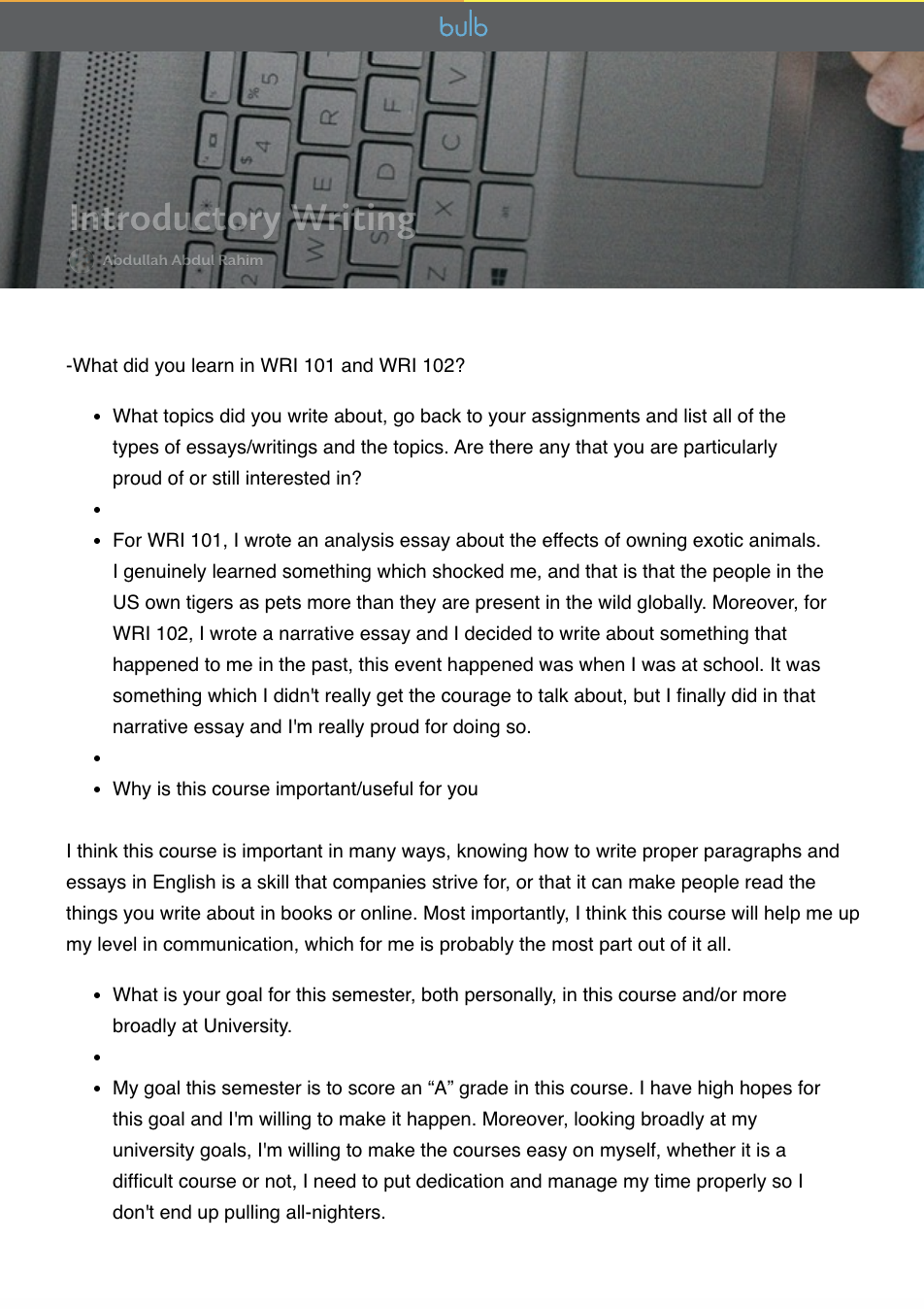
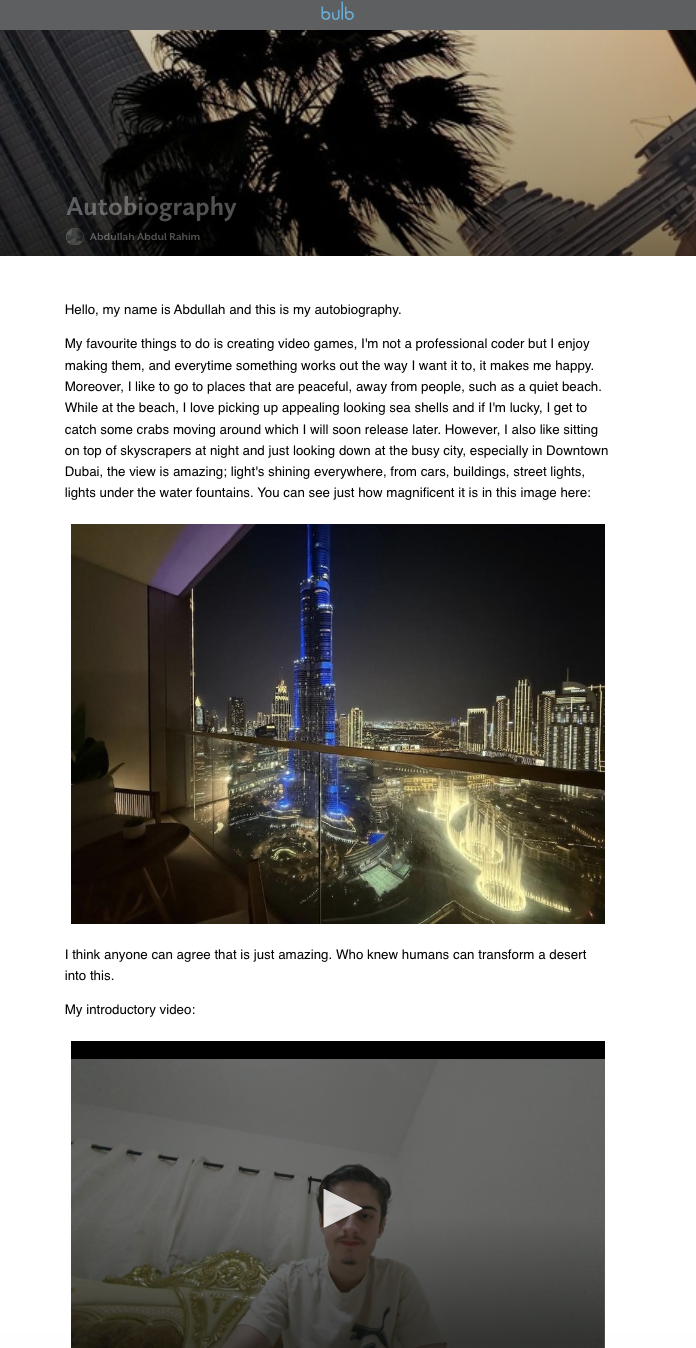
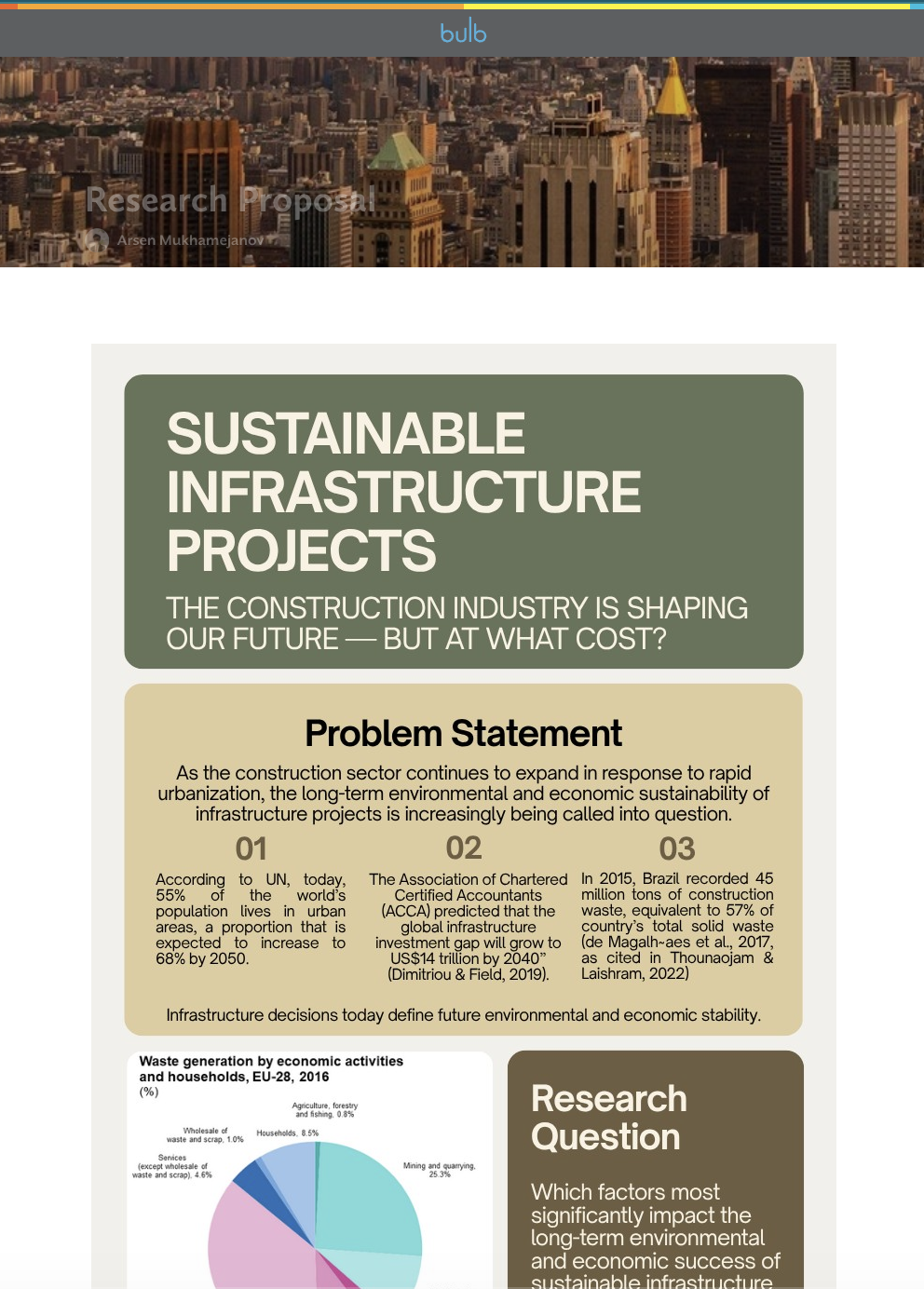
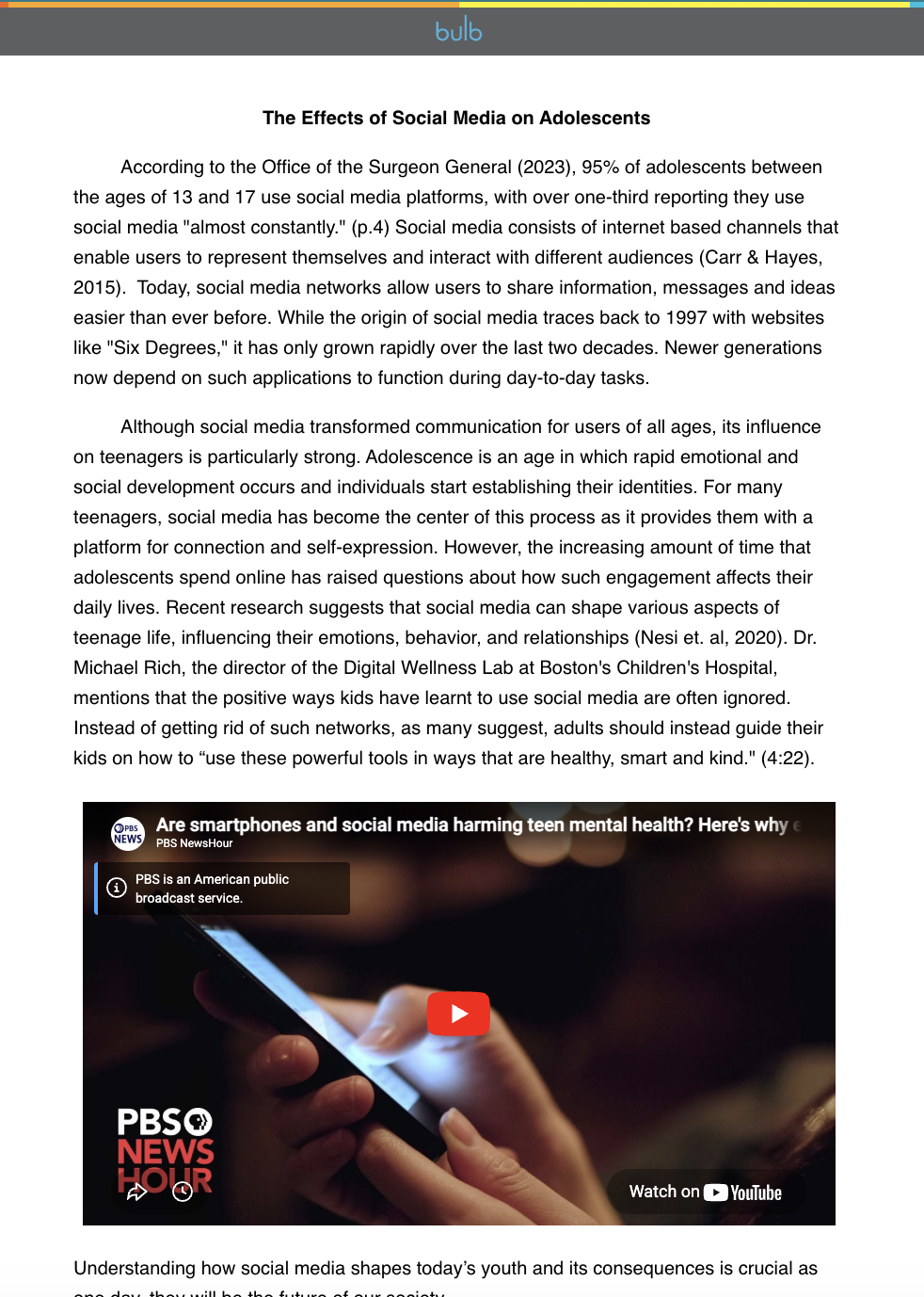
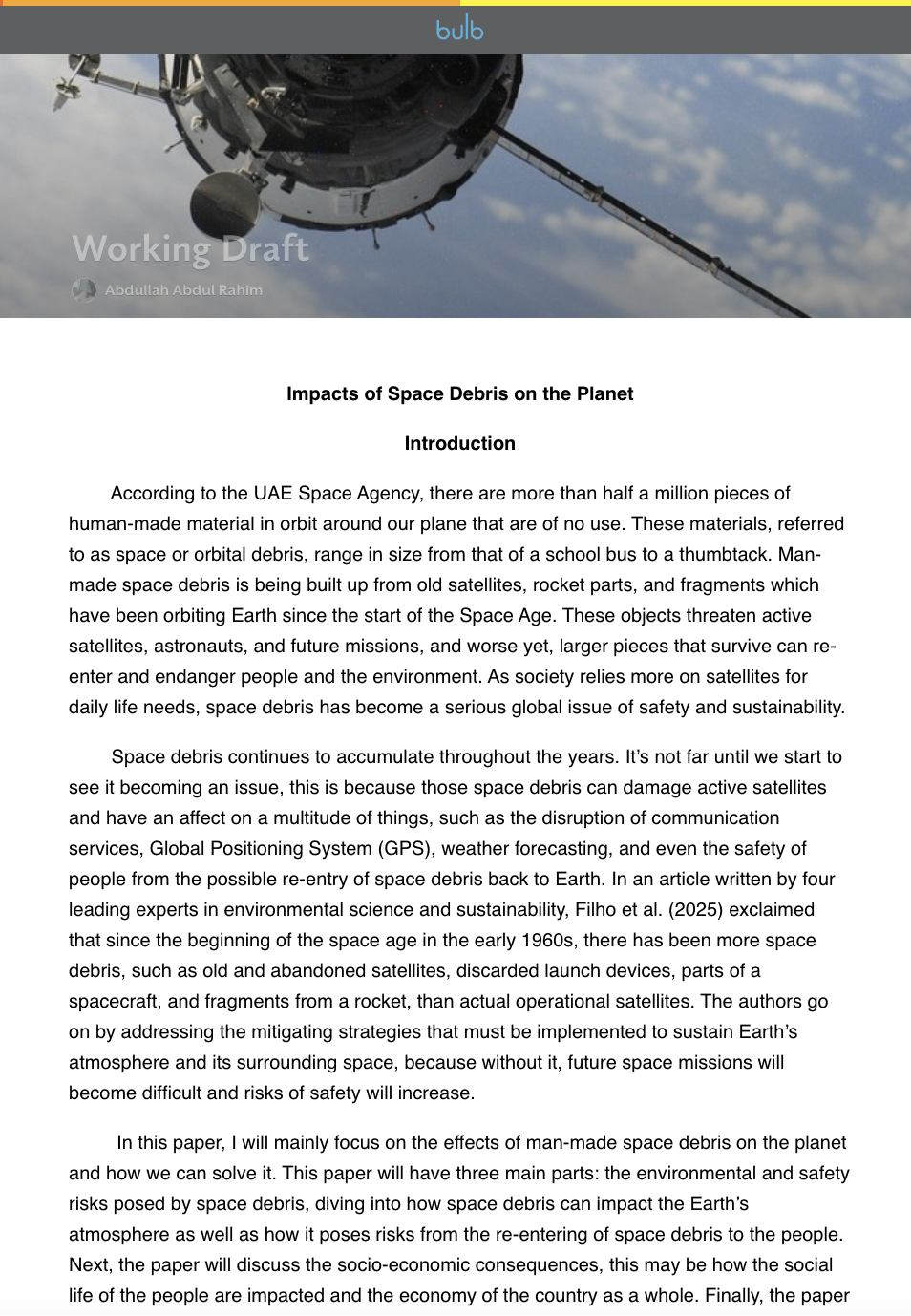
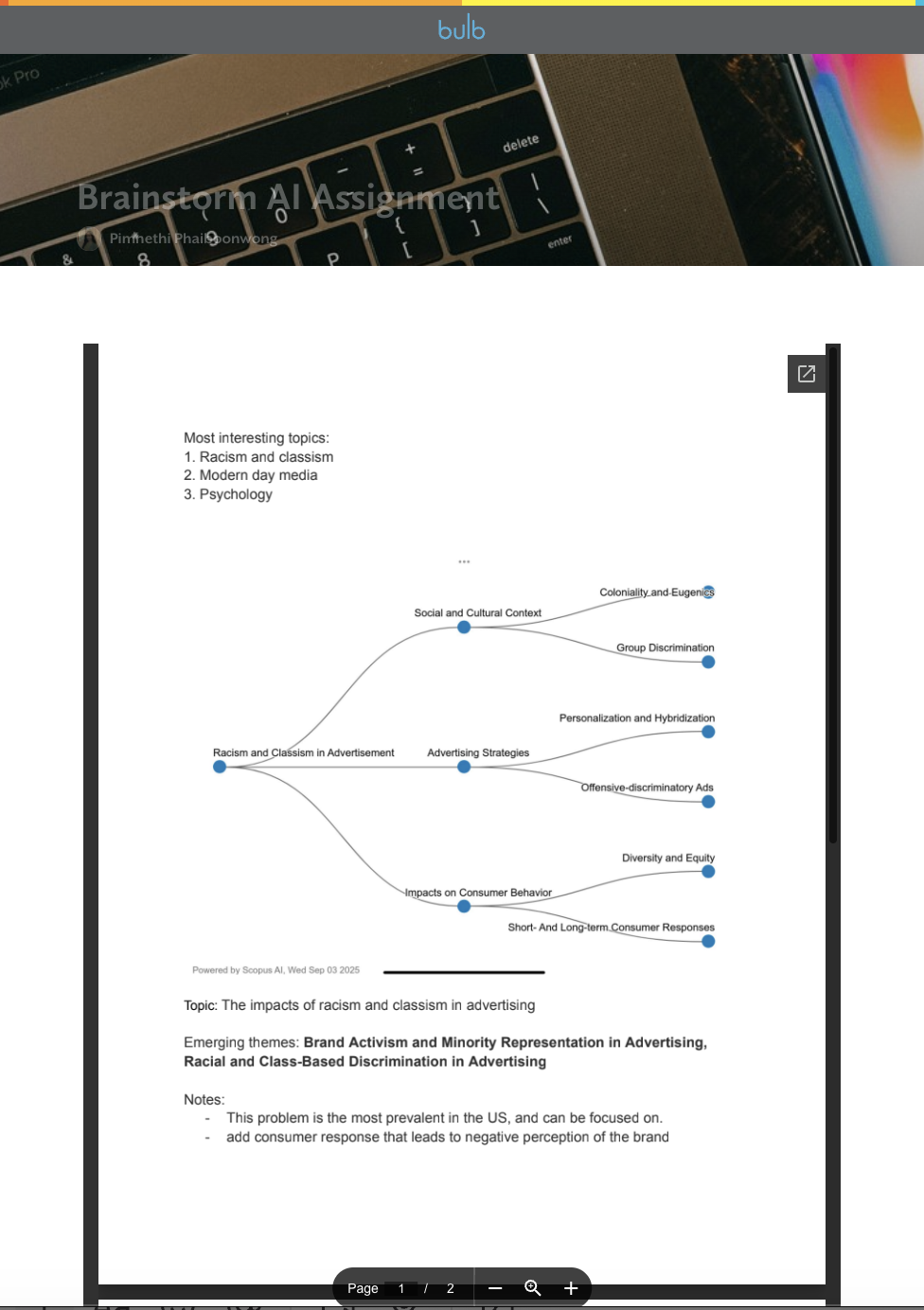
Students used bulb as a writing portfolio. Every assignment throughout the semester was created on bulb, as a multimodal work. Students created everything from video introductions, infographics for a research proposal, multiple drafts of a research paper, a final academic poster presentation and a multimodal research paper as a final assessment. They reflected on their work at the end of the semester; the portfolio helped them see all the effort that had gone into their
final project.
One thing that I really liked about bulb was the intuitive and user-friendly design. I didn’t have to spend class time explaining to my students how to set up a page or how to embed multimodal content into their works; it was very simple.
I also liked how easy it was for students to share their work with me, or with others. The final products that were created in this course can be used as a writing sample for a range of opportunities, from scholarship and study abroad applications to a link on their resume.
Some of the main outcomes were a noticeable increase in student engagement and interest in the research and writing process. Students reported that the multimodal portfolios increased their understanding of their research topics and created a more interesting final product.
Students also increased their confidence in incorporating multimodal elements into a piece of writing and overall increased their enjoyment with the course.
When asked about the impact some students wrote:
Overall, bulb helped me to transform a traditional research writing course into a more interactive, more engaging experience for my students. It has become an essential aspect of how I teach, and I would recommend that all teachers incorporate it into their courses.
We use cookies to provide and improve our service. By using our website, you consent to cookies. See our privacy policy & terms of use to learn more.