
When Jamila walked into her first internship interview, she carried more than just a resume. She had a portfolio. Inside, she’d pulled together her capstone project, reflections from her science lab, and a flyer she designed in Photoshop for a school event. Her interviewer didn’t just hear about her skills—he saw them. By the end of the meeting, he better understood her skills and her strengths and said, “Putting together a portfolio makes you stand out.”
Jamila isn’t alone. Students everywhere are discovering that in today’s world, a list of responsibilities on a resume isn’t enough. Employers and colleges want to see proof—projects, reflections, and real-world skills in action. And that’s where high-impact portfolios come in.
Think about it: LinkedIn’s Global Talent Trends Report notes that demonstrated skills are becoming more valuable than resumes alone. And a CareerBuilder survey found that nearly 60% of hiring managers are more likely to reach out to candidates with portfolios or work samples.
In other words, the game has changed. A portfolio is no longer a “nice to have”—it’s a student’s ultimate digital showcase.
A strong portfolio doesn’t stop at uploading assignments. It tells a story. For example, Carlos included his Certiport industry-backed certifications, internship experience, and reflections on teamwork. Derrell highlighted his culinary creations alongside academic achievements. Each portfolio became more than a collection of files—it became a living story of who they are and what they can do.
Students can include a wide variety of artifacts that demonstrate both academic learning and real-world skills, such as:
When adding artifacts of your work to your portfolio, make sure you are telling a story. Every piece of work can answer questions like:
As John Dewey once said, “We do not learn from experience… we learn from reflecting on experience.” That reflection is what deepens learning and becomes a powerful story.

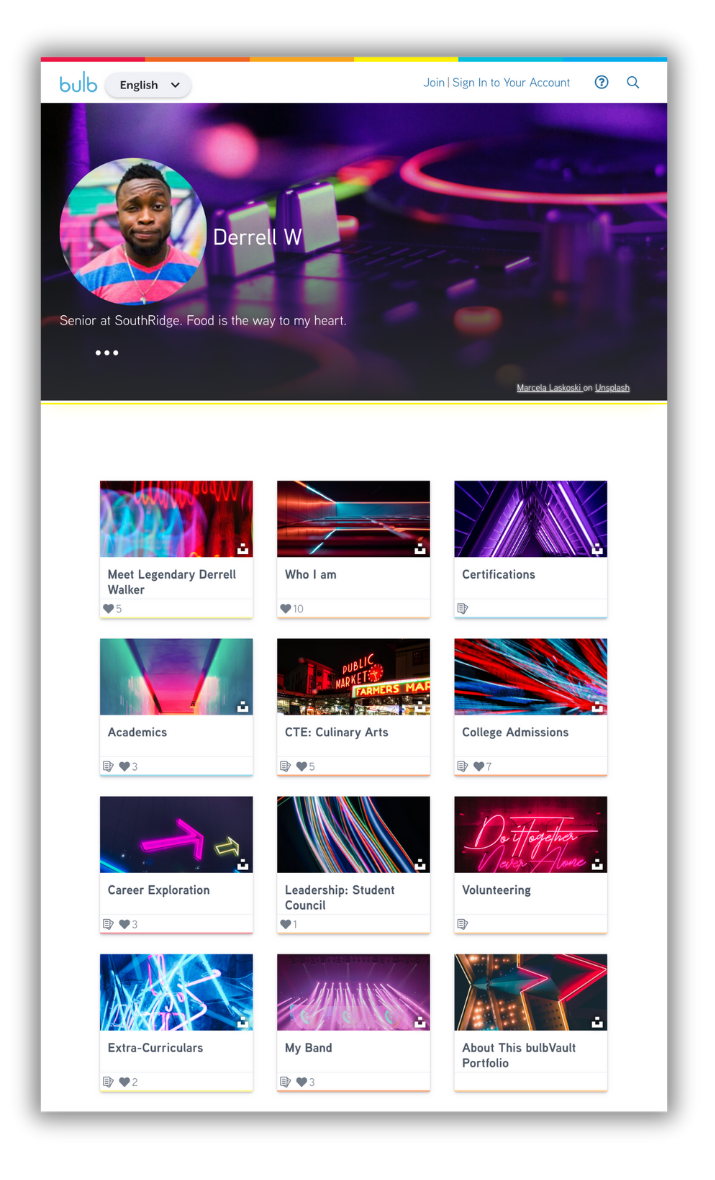

So, what words do you want to come to mind when someone views a student’s portfolio or resume? Innovative. Skilled. Collaborative. Driven. Results-oriented.
Every project—whether it’s a research paper, a club leadership role, or a digital design—becomes a chance to highlight those traits. And when students save two or three meaningful projects each year, by graduation, they’ll have a portfolio that not only captures their journey but also sets them apart in the college or job market.
As one student proudly shared, “I used bulb to get an internship” and another wrote her former teacher at 2 am, saying thanks for helping put together a bulb portfolio and resume, because that made the difference in her getting into Rice University. That’s the power of high-impact portfolios.
A strong resume goes hand-in-hand with a portfolio. But the shift is moving from listing responsibilities to showcasing impact statements. Compare the difference:
Take a look at another example:
See the difference? Impact statements tell a short story highlight outcomes, values, and skills—making a student stand out to future employers or admissions officers. Do you like these examples? Take a look at our sample resume with side-by-side comparisons.
The Takeaway
Resumés will always have their place—but portfolios bring them to life. They help students shine, tell their unique stories, and prove their readiness for the future.
When Jamila’s interviewer said, “This makes you stand out,” he wasn’t just talking about her portfolio. He was recognizing what it represented: her thoughtfulness, professionalism, and self-awareness.
If you’re ready to help your students turn their résumés into real impact, explore how bulb Digital Portfolios can make it simple to create, reflect, and share meaningful work that lasts a lifetime.
👉 Learn more at www.bulbapp.com
We use cookies to provide and improve our service. By using our website, you consent to cookies. See our privacy policy & terms of use to learn more.